Before WhatsApp, before love letters, before the spoken word was considered the most direct route to the heart, there were flowers. In the Victorian era, when strict social codes forbade overt expressions of emotion, the language of flowers — floriography — became a sophisticated, secret vocabulary. A red rose was not merely a flower; it was a declaration. A sprig of lavender whispered devotion. A yellow carnation delivered a gentle rejection.
Today, in an age of instant messaging, this coded botanical language persists — not in the rigid dictionaries of the nineteenth century, but in the intuitive, emotional response we have to certain blooms. You may not know that a white camellia signifies adoration in classical floriography, but you feel it when you receive one.
The Victorian Code
Floriography reached its zenith in Victorian England, where entire conversations could be conducted through the careful arrangement of a bouquet. The angle at which a flower was presented mattered: handed upright, it conveyed a positive sentiment; inverted, the opposite. Even the hand with which a bouquet was received — right hand for “yes,” left for “no” — carried meaning.
Lady Mary Wortley Montagu, writing from the Ottoman court in the early eighteenth century, first introduced Europe to the Turkish tradition of selam — a system where flowers and objects carried coded messages. By 1819, the first floral dictionary had been published in Paris, and soon every respectable drawing room possessed a copy.
The Modern Lexicon
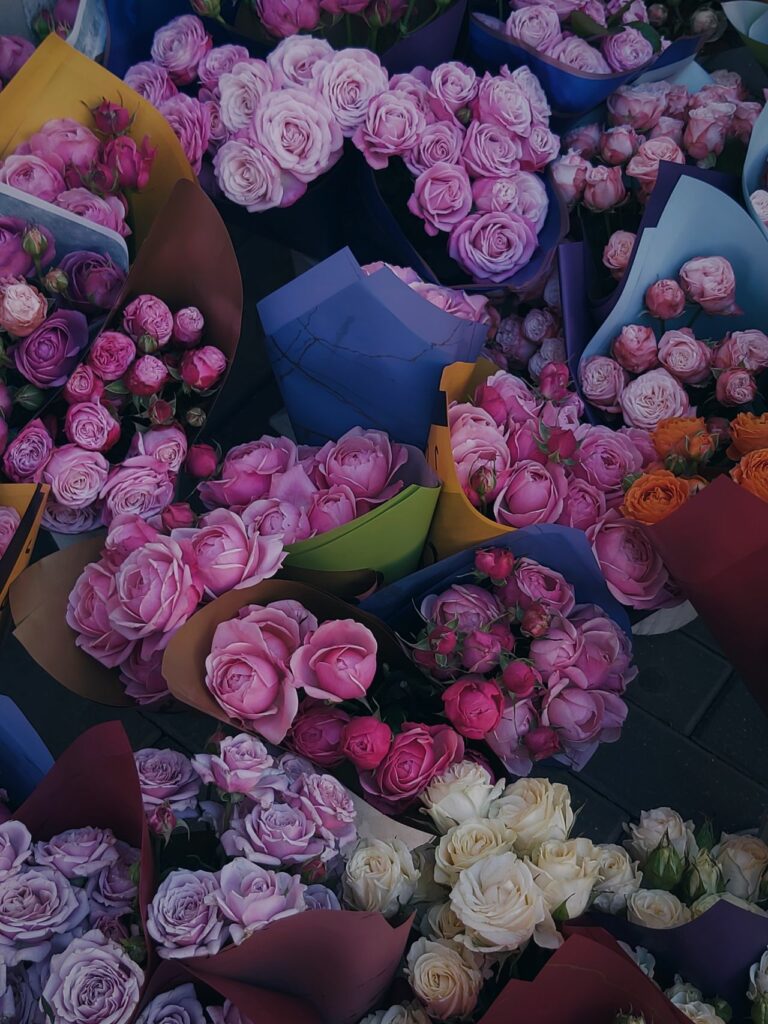
While the strict Victorian codes have largely faded, their echoes remain in the flowers we choose today. Red roses still mean passionate love. White lilies still signify purity and sympathy. Sunflowers still radiate adoration and loyalty. The florist’s craft is, in part, the art of translating emotion into botany.
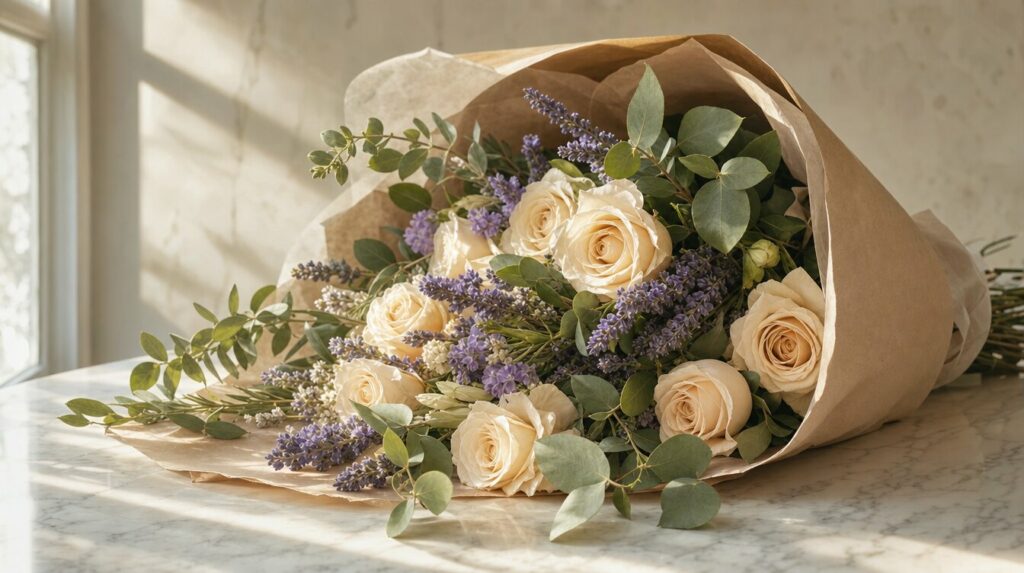
At Bloom Florist, we think of every bouquet as a letter — composed not in ink but in petals. The cream rose speaks of thoughtfulness. The sprig of eucalyptus offers protection and abundance. The delicate wax flower whispers of lasting love. Together, they form a sentence more eloquent than any greeting card.
Writing Your Own Floral Message
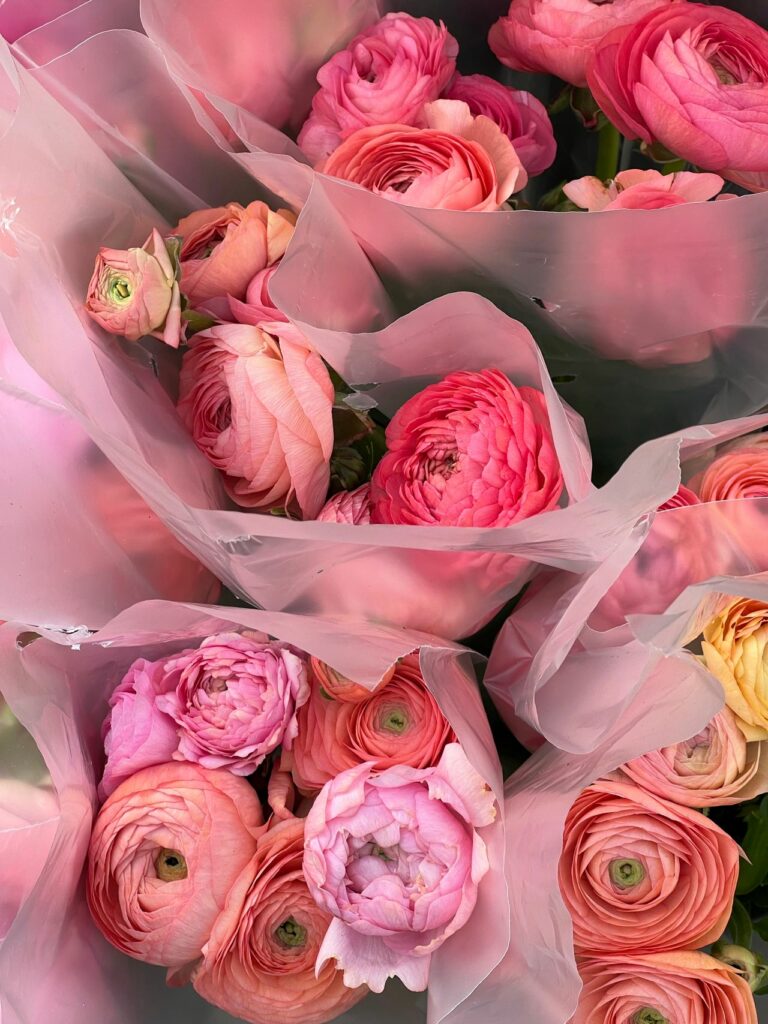
When choosing flowers for someone, consider not just colour and form, but the story you want to tell. For a new beginning, pair white ranunculus (radiant charm) with soft pink spray roses (grace and gratitude). For a celebration, combine goldenrod (encouragement) with orange tulips (energy and enthusiasm). For a quiet apology, a simple arrangement of white hyacinths (forgiveness) says everything needed.
The beauty of the language of flowers is that it requires no fluency — only sincerity. The right bouquet, chosen with care, speaks to the heart in a language older than words.